
There is a moment every January 6 that I wait for all year. The rosca sits in the middle of the table, still smelling like orange and butter, and everyone gets quiet while the knife goes around. Who will find the little baby? Nobody wants it and everybody wants it, because finding the muñeco means you are hosting tamales on February 2.
When I was a little girl in Mexico, Día de Reyes started the night before. My shoes went by the door with a note for the Reyes Magos tucked inside, and in the morning there was always something small waiting for me. By evening the whole family was squeezed around one table, my tías teasing each other about who would get the baby, and my dad holding the knife like it was the most serious job in the world. He cut slowly and made a big show of it, and every year he swore he had no idea where the muñeco was hiding. Somehow it always seemed to end up on my plate, and he would laugh and remind me that I owed everyone tamales.
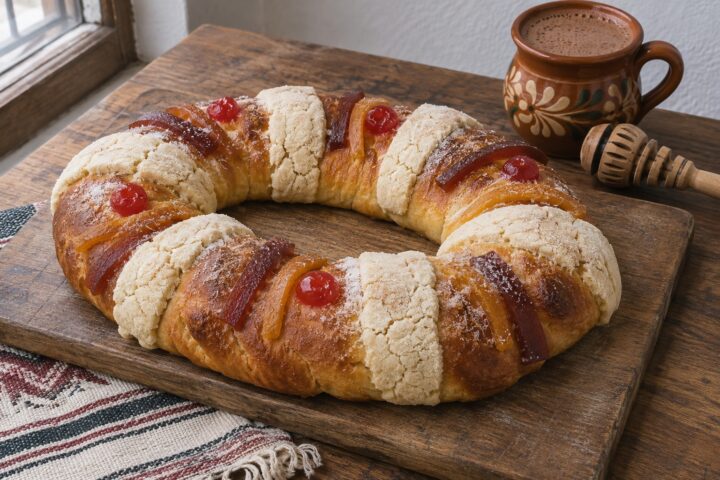
When I moved to Arizona, the rosca was one of the traditions I held onto the tightest. You can find them at the panadería, and some years I still buy one. But baking it at home is something different. The whole house smells like pan dulce, the kids help press the ate into the top, and it feels like bringing a little piece of home into my kitchen.
My dad was the one who taught me that good bread can't be rushed. He would cover the dough with a kitchen towel, set it near the warm stove, and tell me to leave it alone, which was the hardest thing anyone could ask of me. I still hear him every time I lift the towel too early. Now my kids are the ones pressing the ate into the top, sneaking pieces of candied fruit when they think I'm not looking, and it feels like his kitchen and mine meet right there on my counter.
This is the rosca de reyes recipe I make now. It is soft and fluffy inside, with a gentle orange flavor, a crackly sugar paste on top, and strips of ate and candied fruit like little jewels on a crown. I give every measurement in grams and cups, because enriched bread is happiest when you weigh your flour.
Why this rosca recipe works
- A small starter first. A quick esponja of yeast, warm milk, sugar and a spoonful of flour wakes the yeast up, so a rich dough full of butter and eggs still rises tall.
- Butter goes in last. Kneading the dough before adding soft butter builds the structure, so the bread stays light instead of greasy.
- Orange zest and a little orange blossom water. Zest gives the classic panadería flavor. A teaspoon of orange blossom water is optional, and it makes the whole kitchen smell like a bakery.
- A simple sugar paste. Equal parts flour and powdered sugar with soft butter gives you those sweet crunchy stripes on top without any special tools.
- The figurine goes in after baking. It is safer, it never melts, and you choose exactly where it hides.
Ingredients you will need
For the dough: all-purpose flour, instant yeast, whole milk, sugar, eggs, unsalted butter, salt, vanilla, orange zest, and orange blossom water if you have it. Bread flour works too and gives a slightly chewier crumb; add a tablespoon or two of extra milk if the dough feels stiff.
For the sugar paste (pasta para la rosca): flour, powdered sugar, soft butter and one egg yolk. Some families use half butter and half vegetable shortening or lard, which gives a whiter, crumblier topping.
For decorating: ate, candied orange peel, and candied or maraschino cherries. Ate is a firm Mexican fruit paste, usually quince (membrillo) or guava (guayaba). In the US, look for "quince paste" or "membrillo" in the Latin aisle or near the cheese counter. If you cannot find it, use candied figs, dried apricots, or thick strips of guava paste.
The muñeco: a small heat-safe plastic or ceramic baby figurine, sold at Mexican markets and online. A whole blanched almond or a dried bean works too, which is how the tradition started.
Here is what I reach for every time I bake a rosca:
- Stand mixer with a dough hook. You can knead by hand; it just takes longer.
- Kitchen scale for the flour.
- Large rimmed baking sheet and parchment paper.
- Rolling pin for the sugar paste strips.
- Instant-read thermometer to check for 190°F inside.
- Pastry brush for the egg wash.
How to make rosca de reyes, step by step
1. Make the starter. Warm the milk to about 105 to 110°F, warm to the touch but not hot. Stir in the yeast, 1 tablespoon of the sugar and 3 tablespoons of the flour. Let it sit 15 to 20 minutes until bubbly and foamy. If nothing happens, your yeast may be old, so start again before using the rest of your ingredients.
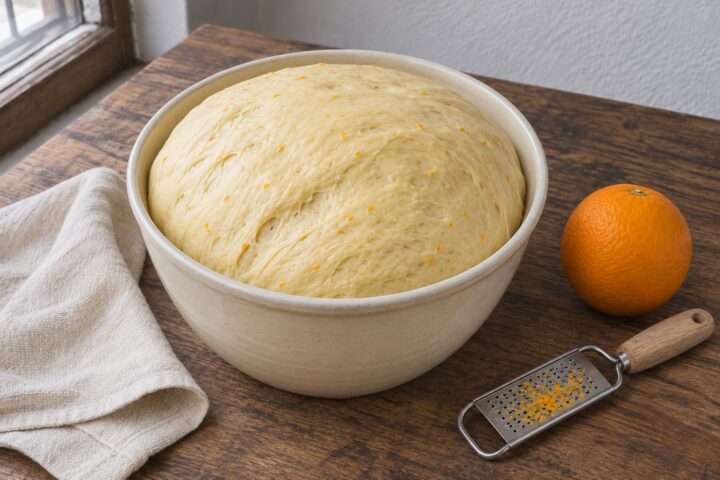
2. Mix the dough. In a stand mixer with the dough hook, combine the remaining flour, remaining sugar, salt and orange zest. Add the starter, eggs, vanilla and orange blossom water. Mix on low until a shaggy dough forms, then knead on medium-low for about 6 minutes. It will be sticky. That is normal.
3. Add the butter. With the mixer running, add the soft butter one tablespoon at a time, letting each piece disappear before the next. Knead 8 to 10 minutes more, until the dough is smooth, shiny and pulls away from the sides. It should stretch thin without tearing when you pull a small piece between your fingers.
Tip: Resist adding lots of extra flour. A slightly tacky dough bakes into a softer rosca. Oil your hands instead.
4. First rise. Place the dough in a lightly greased bowl, cover, and let it rise in a warm spot (75 to 80°F) for 1 ½ to 2 hours, until doubled. In a cool winter kitchen, set the bowl in the oven with only the light on.
5. Make the sugar paste. While the dough rises, beat the soft butter and powdered sugar until creamy, then mix in the flour and egg yolk until it comes together like soft play dough. Wrap and chill about 20 minutes so it is easy to handle.
6. Shape the ring. Line a large baking sheet with parchment. Punch the dough down and roll it into a long rope, about 26 to 28 inches. Bring the ends together to form a large oval ring, pinch the seam well, and set it seam side down on the pan. Leave a wide hole in the middle, since it will close as it rises and bakes.
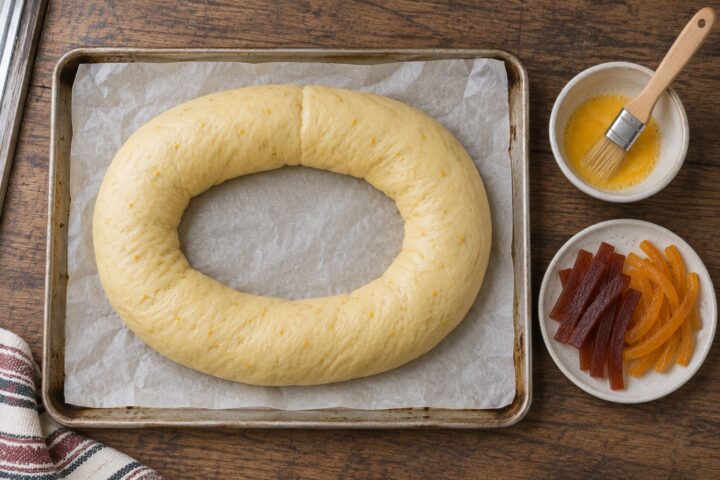
7. Second rise. Cover loosely and let it rise 45 minutes to 1 hour, until puffy. When you press a finger in gently, the dent should spring back slowly. Heat the oven to 350°F (175°C) during the last 20 minutes.
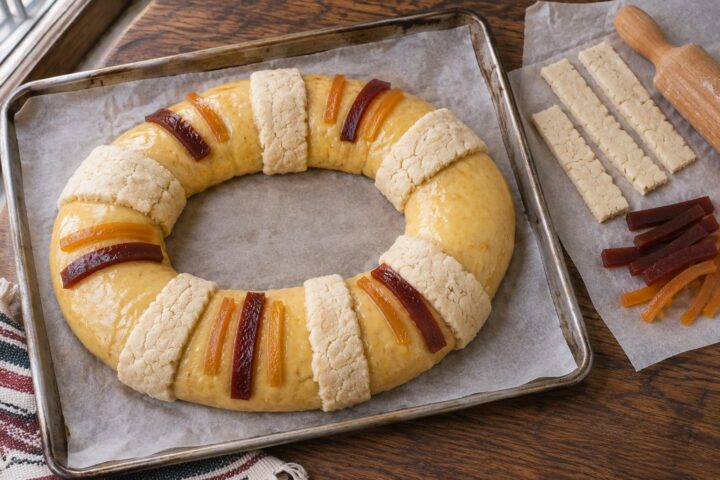
8. Decorate. Brush the ring all over with the egg wash. Divide the sugar paste into 8 pieces, flatten each between two sheets of parchment into a strip about ⅛ inch thick, and lay them across the ring. Press strips of ate and candied fruit in between, then sprinkle the paste stripes with a little granulated sugar.
9. Bake. Bake 25 to 30 minutes, rotating the pan halfway, until deep golden and the inside reads 190°F on a thermometer. If the top browns too fast, tent loosely with foil for the last 10 minutes.
10. Cool and hide the baby. Let the rosca cool at least 30 minutes. Lift one side and push the muñeco in from the bottom so it is hidden. For a big family, hide two or three.
A note on the muñeco
Always add the figurine after baking, never into raw dough. Tell everyone, especially little ones, that there is a baby hidden inside before you start slicing. With small children at the table, I like to keep an eye on their slices, or use a whole almond instead.
Make ahead and storage
- Overnight dough: After step 3, cover the bowl and refrigerate 8 to 16 hours. The next day, let it sit at room temperature about 1 hour, then shape and continue. The slow rise gives even more flavor.
- Bake a day early: A baked rosca keeps well, wrapped, for 1 day and still tastes fresh on Día de Reyes.
- Leftovers: Wrap leftovers tightly and keep at room temperature up to 3 days. Rewarm slices at 300°F for 5 to 8 minutes, or for a few seconds in the microwave.
- Freezing: Freeze the baked, cooled rosca (without the figurine) wrapped well for up to 1 month. Thaw at room temperature in its wrapping.
A few ways I like to change it up:
- Rosca rellena: Before shaping, roll the dough into a long rectangle, spread it with softened cream cheese sweetened with 2 tablespoons of sugar (or with nata), and roll it up tightly into a rope. Pinch the seam closed and shape as usual. Many panaderías in Mexico City sell them this way.
- Chocolate sugar paste: Swap 2 tablespoons of the flour in the topping for unsweetened cocoa powder.
- Mini roscas: Divide the dough into 8 pieces, shape small rings, and bake 15 to 18 minutes.
- Dairy-free: Use oat or almond milk and stick-style plant butter in both the dough and the sugar paste.
- A little anise: Add ½ teaspoon ground anise to the dough, like my anise-scented pan de muerto.
The tradition behind the rosca
Día de Reyes, on January 6, celebrates the three kings who followed the star to visit baby Jesus. The oval rosca represents a crown, and the dried fruits are its jewels. The hidden baby recalls the story of Mary and Joseph hiding Jesus from King Herod.
Whoever finds the muñeco in their slice becomes the godparent of the baby for the year, and by tradition hosts a tamalada on February 2, Día de la Candelaria. So really, the rosca is the start of the next celebration.
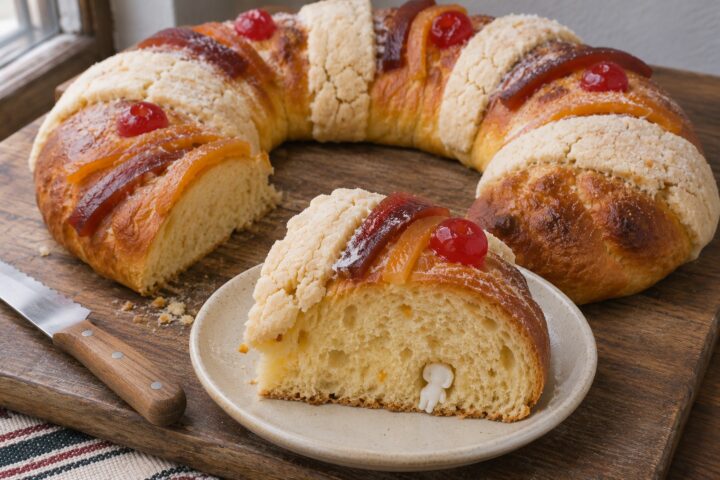
The tradition came to Mexico from Spain, where it is called roscón de reyes, and it has been part of Mexican holidays for centuries. In Mexico, we usually pair it with hot chocolate, champurrado or atole, and it is one of the last sweet traditions of the long holiday season that starts with Las Posadas.
In our house the rosca always comes with a pot of champurrado or Mexican hot chocolate, beaten with the molinillo until every mug wears a little cap of foam. The night before, my kids still leave their shoes out for the kings, the same way I did. January in Arizona feels nothing like the Januarys I grew up with, but when the rosca comes out of the oven and the house fills with orange and butter, it feels exactly like home.
What to serve with rosca de reyes
- A warm mug of Champurrado (Mexican Chocolate Atole)
- Champurrado de Galletas Marías, no masa needed
- Vanilla Atole with Masa Harina
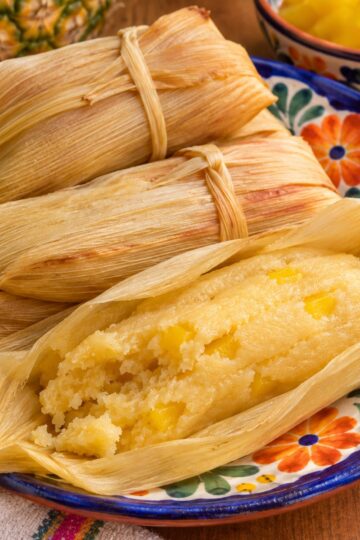
- And for February 2: Red Pork Tamales, Tamales Verdes de Pollo and Tamales Dulces de Piña
Rosca de reyes FAQ
What is rosca de reyes?
Rosca de reyes, or three kings bread, is a soft, sweet yeast bread shaped like an oval crown. It is decorated with sugar paste and candied fruit, and a small baby figurine is hidden inside. Families in Mexico share it on January 6, Día de Reyes.
Is rosca de reyes a Mexican tradition?
Yes. It started in Spain as the roscón de reyes and came to Mexico during the colonial era. Today it is one of the most loved Mexican holiday traditions, along with the tamales that follow on February 2.
What happens if you get the baby in the rosca?
Whoever finds the muñeco hosts a tamalada on Día de la Candelaria, February 2, and brings the tamales and atole for everyone who shared the rosca.
What is the difference between rosca de reyes and roscón de reyes?
They are cousins. The Spanish roscón is often filled with whipped cream or pastry cream and flavored with orange blossom water. The Mexican rosca is usually unfilled, with sugar paste stripes and ate on top.
What can I use instead of ate?
Quince paste (membrillo) is the same thing you are looking for. Guava paste, candied figs, dried apricots, candied orange peel or cherries all work. Use what your family likes.
Can I make rosca de reyes ahead of time?
Yes. Let the dough rise overnight in the fridge, or bake the rosca the day before and keep it wrapped at room temperature. Add the figurine just before serving.
Why didn't my rosca rise?
Usually the yeast was old, the milk was too hot, or the kitchen was cold. Check that your starter bubbles before mixing, keep the milk around 105 to 110°F, and give the dough a warm spot and extra time. Rich doughs can take up to 2 ½ hours on a chilly day.
More holiday recipes from my kitchen
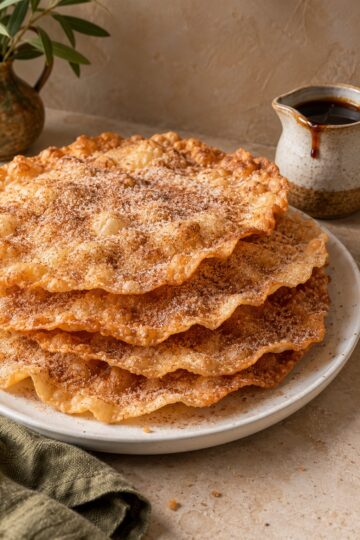
If you are planning your holiday table, you might also like my crispy Mexican buñuelos, Arroz con Leche, Ponche Navideño and Pan de Muerto, or browse all my Holiday Recipes.
Rosca de Reyes (Three Kings Bread)
Equipment
- Stand mixer with dough hook
- Kitchen scale
- Large rimmed baking sheet
- Parchment paper
- Rolling Pin
- Instant-read thermometer
- Pastry brush
Ingredients
Starter
- ½ cup (120 ml) whole milk warmed to 105 to 110°F
- 2 ¼ teaspoons (7 g, 1 packet) instant or active dry yeast
- 1 tablespoon (12 g) granulated sugar taken from the dough sugar
- 3 tablespoons (24 g) all-purpose flour taken from the dough flour
Dough
- 3 ¾ cups (450 g) all-purpose flour spooned and leveled, includes the starter flour
- ½ cup (100 g) granulated sugar includes the starter sugar
- 1 teaspoon (6 g) fine salt
- 1 large orange zested
- 3 large eggs room temperature
- 2 teaspoons vanilla extract
- 1 teaspoon orange blossom water optional
- ½ cup (113 g) unsalted butter very soft, cut into 8 pieces
Sugar paste topping
- ¼ cup (57 g) unsalted butter softened, or half vegetable shortening
- ½ cup (60 g) powdered sugar
- ½ cup (60 g) all-purpose flour
- 1 egg yolk
Egg wash and decoration
- 1 large egg beaten with 1 tablespoon milk
- 4 oz (115 g) ate (quince or guava paste) cut into strips
- candied orange peel and candied or maraschino cherries patted dry
- 1 tablespoon granulated sugar for sprinkling
- 1 to 3 heat-safe baby figurines added after baking
Instructions
- Starter: Stir the warm milk, yeast, 1 tablespoon sugar and 3 tablespoons flour together. Rest 15 to 20 minutes until foamy.
- Dough: In a stand mixer with the dough hook, combine the remaining flour, remaining sugar, salt and orange zest. Add the starter, eggs, vanilla and orange blossom water. Mix on low until combined, then knead on medium-low for 6 minutes.
- Butter: Add the butter one piece at a time, letting each piece mix in before adding the next. Knead 8 to 10 minutes more, until smooth, shiny and stretchy.
- First rise: Cover in a greased bowl and let rise in a warm place 1 ½ to 2 hours, until doubled. (Or refrigerate 8 to 16 hours.)
- Sugar paste: Beat the butter and powdered sugar until creamy. Mix in the flour and egg yolk until a soft dough forms. Wrap and chill 20 minutes.
- Shape: Punch down the dough, roll it into a 26 to 28 inch rope, and form an oval ring on a parchment-lined baking sheet. Pinch the seam closed and leave a wide hole in the center.
- Second rise: Cover loosely and let rise 45 to 60 minutes, until puffy. Heat the oven to 350°F (175°C).
- Decorate: Brush with egg wash. Flatten the sugar paste into 8 strips about ⅛ inch thick and lay them across the ring. Add ate and candied fruit between the strips. Sprinkle with sugar.
- Bake: Bake 25 to 30 minutes, rotating halfway, until deep golden and 190°F inside. Tent with foil if it browns too fast.
- Finish: Cool at least 30 minutes. Push the figurine in from the bottom. Tell everyone the baby is inside before slicing.
Notes
- Weigh the flour for best results. Too much flour makes a dry rosca.
- No stand mixer: knead by hand 15 to 20 minutes, adding the butter in pieces. It is messy at first and comes together.
- Storage: wrapped, 3 days at room temperature. Freeze baked and cooled up to 1 month.
- Safety: add the figurine only after baking, and watch young children's slices.
Leave a Reply