
There is something tender about making pan de muerto: the orange fragrance filling the kitchen, the dough rising slowly, and the quiet care of shaping each little bone across the top. For Día de Muertos, this bread belongs to a season of remembering and gathering. I love it soft enough to pull apart with my hands, lightly sweet with orange and anise, and covered in sugar that catches on your fingertips. Each loaf has its own handmade shape, just as it should.
If this is your first time shaping the bread, do not worry about making every decoration identical. Give the dough your hands and your time. Whether the loaf sits on an ofrenda or is passed around a table with warm drinks, the act of making it can be part of how you welcome someone into the season and remember someone you miss.
Quick answer
Pan de muerto is an enriched Mexican sweet bread commonly made for Día de Muertos. To make it, knead a soft dough with milk, eggs, butter, orange zest, and anise; let it rise, shape the round loaves and bone decorations, rise again, bake, then brush with butter and sprinkle with sugar.
Recipe
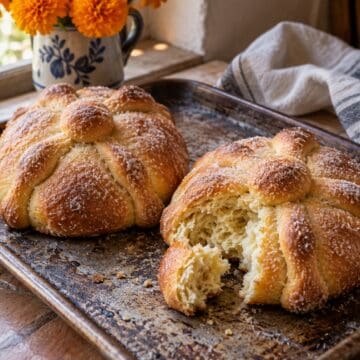
Pan de Muerto with Orange and Anise
Ingredients
- 4 cups (480 g) all-purpose flour, plus a little for shaping
- 2 ¼ teaspoons (one 7 g packet) instant yeast
- ½ cup (100 g) granulated sugar
- 1 teaspoon fine salt
- ½ teaspoon ground anise seed
- Finely grated zest of 1 large orange
- ¾ cup (180 ml) whole milk, warm but not hot
- 2 large eggs, room temperature
- 1 teaspoon orange blossom water, optional
- 8 tablespoons (113 g) unsalted butter, very soft, for dough
- 2 tablespoons (28 g) unsalted butter, melted, for finish
- ¼ cup (50 g) granulated sugar, for finish
Instructions
- Mix flour, yeast, sugar, salt, anise, and orange zest. Add warm milk, eggs, and orange blossom water. Mix to a shaggy dough. Knead 5 minutes, then add the 8 tablespoons soft butter in 3 additions. Continue kneading 8 to 12 minutes until smooth and elastic. The dough may remain slightly tacky; avoid adding much extra flour.
- Cover in a lightly greased bowl and let rise until doubled, usually 75 to 100 minutes, depending on room temperature.
- Set aside about one-fifth of the dough for decorations. Divide the rest in half and shape each piece into a round loaf. Place on separate parchment-lined trays.
- Divide the reserved dough into ten small pieces. Roll eight into short ropes, pressing with fingers to create knobby bone shapes. Cross four ropes over each loaf and add one small ball in each center. Press gently so they adhere.
- Cover loosely and let rise until visibly puffy, about 45 to 60 minutes. Heat oven to 350°F during the last 20 minutes of the rise.
- Bake 28 to 35 minutes, swapping tray positions halfway through, until deep golden and the center of each loaf reaches about 190°F. Cool 10 minutes. Brush with melted butter and coat with sugar. Cool further before slicing.
Notes
Shaping and baking notes
The decorations do not need to match exactly. A little irregularity is part of hand shaping. Keep the dough soft; too much flour makes a dense loaf. If the tops brown early, cover loosely with foil for the last few minutes. The bread is best the day it is made. Store airtight at room temperature for 2 days or freeze well wrapped for up to 2 months.
The details that make this bread special
Orange zest should be noticeable before the bread even reaches the oven. Anise stays quieter in the background, giving the sweetness a warm, familiar edge. Once baked, the crust should be golden and delicate, and the inside soft enough to pull into long pieces. Brush on the butter while the loaves are still warm so the sugar catches in the curves of the bone-shaped dough.
I do not chase perfectly matched loaves here. Shaping them by hand is part of the pleasure, and those small differences make each one feel like it belongs to the people sharing it. Serve thick slices with a warm drink and give the bread time to be part of the conversation.
Frequently asked questions
What does pan de muerto taste like? It is a soft, mildly sweet bread with orange aroma and a light anise note. It is usually finished with butter and sugar.
Can I make the dough ahead? After the first knead, cover and refrigerate overnight. Let it warm enough to shape the next day; the rise may take longer.
Is orange blossom water required? No. Orange zest carries the main flavor. The blossom water adds a subtle floral note.
Serve with
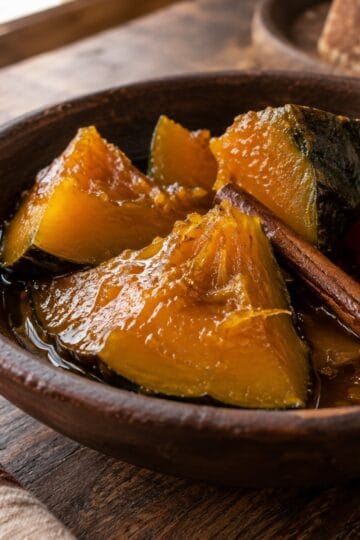
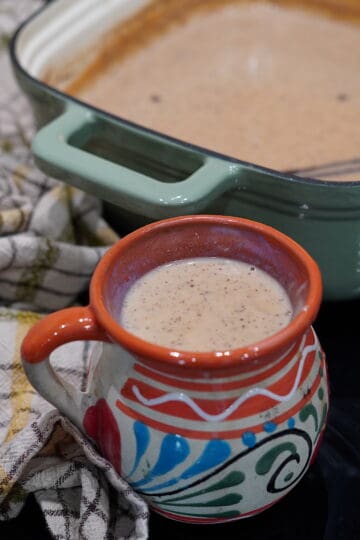
Serve with vanilla atole or champurrado de galletas. For a Día de Muertos menu, add pozole rojo and calabaza en tacha.
Leave a Reply