
When piloncillo and cinnamon begin to melt together, the whole kitchen smells like fall. Calabaza en tacha is simple food with a sense of occasion: big wedges of squash slowly turning tender and amber in a fragrant syrup. I love to spoon a little of that syrup over each piece and let the squash be the star. It has a special place on the Día de Muertos table, yet it is just as welcome as a quiet dessert on a cool evening. Orange peel adds a gentle brightness to the deep sweetness.
If you grew up with this sweet, the aroma may feel familiar before you take a bite. If it is new to you, start with a warm wedge and a spoonful of syrup, and notice how the squash keeps its own gentle flavor beneath the piloncillo. There is no elaborate finish to master; this is a dish that rewards a little patience.
Quick answer
Calabaza en tacha is Mexican squash cooked in piloncillo syrup, often for Día de Muertos. Simmer sturdy wedges of calabaza de Castilla or kabocha in water, piloncillo, cinnamon, clove, and orange peel until tender, then reduce the liquid to a spoonable syrup.
Recipe
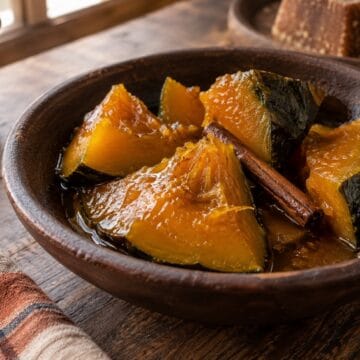
Calabaza en Tacha (Mexican Candied Squash)
Ingredients
- 3 pounds calabaza de Castilla or kabocha squash, washed and cut into 8 large skin-on wedges, seeds removed
- 8 ounces piloncillo, chopped or broken up
- 2 cups water
- 2 Mexican cinnamon sticks
- 2 whole cloves
- 2 wide strips orange peel, with little white pith
- 1 small pinch fine salt
Instructions
- Put water, piloncillo, cinnamon, cloves, orange peel, and salt into a wide heavy pot. Warm over medium heat, stirring occasionally, until the piloncillo dissolves, about 8 minutes.
- Add the squash in a single layer where possible, skin side down. Spoon syrup over the exposed flesh. Cover and simmer gently for 35 minutes. Do not stir vigorously; use a spoon to baste every 10 minutes.
- Uncover and simmer another 20 to 35 minutes, until a knife slides through the squash flesh. Remove the squash carefully to a serving dish.
- If the liquid is thin, simmer it uncovered for 5 to 10 minutes until lightly syrupy. Remove cinnamon, cloves, and orange peel. Spoon the warm syrup over the squash.
Notes
Squash choice and serving
Calabaza de Castilla is traditional but can be difficult to find in the United States. Kabocha keeps its shape well and makes a practical substitute. Some pumpkin varieties soften faster; check early so the wedges do not collapse. Serve warm or chilled, with a little of the cooking syrup. A splash of milk is an optional serving variation.
Let the syrup tell you when it is ready
The syrup should smell of cinnamon and dark sugar and cling lightly to a spoon, but it should still move around the squash. As the wedges cook, their edges become translucent and tender while the skin keeps them together. I baste instead of stirring because that preserves the beautiful rough shape of each piece.
This dessert does not need decoration. A warm wedge and a spoonful of syrup carry the whole story of fall squash, piloncillo, and the Día de Muertos season. If you serve it cold the next day, the flavor settles into something deeper and quieter.
Frequently asked questions
Do I peel the squash? No. The sturdy skin helps wedges hold together while simmering. The cooked flesh is easy to scoop away at the table.
Can I use brown sugar instead of piloncillo? You can use about 1 packed cup dark brown sugar, but the flavor will be less earthy. Start with 1 ½ cups water because brown sugar dissolves differently.
How long does it keep? Cool, refrigerate in its syrup within 2 hours, and use within 4 days.
Serve with
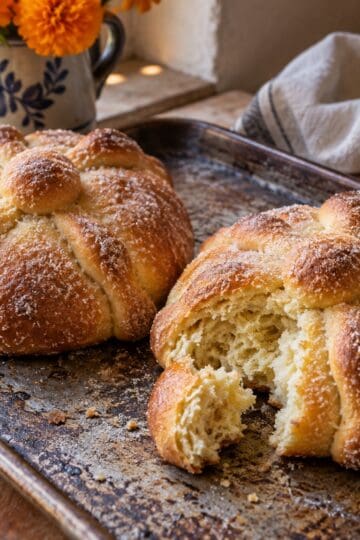
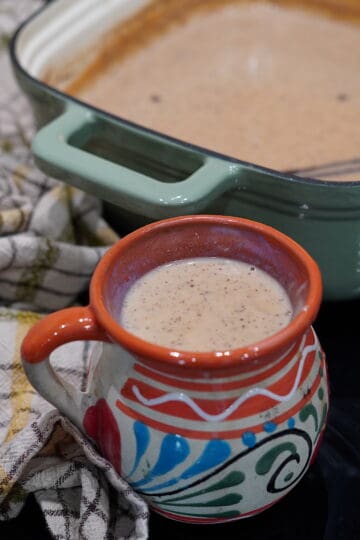
Offer it after pozole verde or pozole rojo, with pan de muerto and a mug of vanilla atole.

Leave a Reply